
ROLE OF ALDOSTERONE
For patients with systolic blood pressure >140 mm Hg despite taking 2 or more antihypertensives
As a central component of the RAAS pathway, aldosterone is responsible for controlling blood pressure by regulating the balance of sodium, potassium, and water in the body.[3b],[4],[5]
Beyond the RAAS, excess circulating aldosterone contributes to inflammation and fibrosis of the heart, vasculature, and kidneys, leading to end-organ damage.[6],[7]
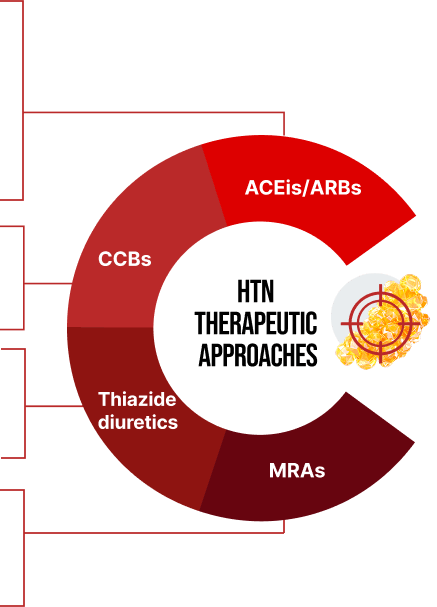
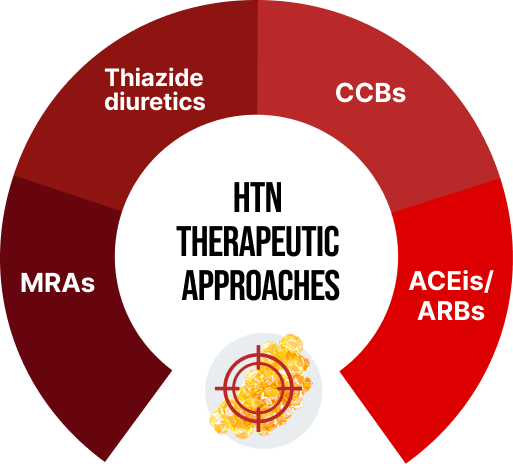
There are 18 classes of antihypertensives available, yet many patients are still uncontrolled[8]


CCBs prevent the movement of calcium into the cells of blood vessels, resulting in vasodilation[11]

Thiazide diuretics inhibit sodium reabsorption in the kidney, promoting natriuresis and diuresis, reducing intravascular volume[12]

MRAs bind to and block the mineralocorticoid receptor to prevent aldosterone from activating it, decreasing sodium reabsorption and reducing fluid volume[13]
COULD TARGETING ALDOSTERONE AT THE SOURCE BE A MISSING LINK IN THE TREATMENT OF HARD-TO-CONTROL HYPERTENSION?


This list represents selected antihypertensive medications for educational purposes and does not represent a comprehensive treatment list.
Want to be first in line for the latest information about the role of aldosterone as a driver of hypertension? Sign up here.
By clicking "Sign up," you're confirming that you agree to our Privacy Policy.

ACEi=angiotensin-converting enzyme inhibitor; ARB=angiotensin receptor blocker; AT1=angiotensin II type 1; CCB=calcium channel blocker; HTN=hypertension; MRA=mineralocorticoid receptor antagonist; MSL=medical science liaison; RAAS=renin-angiotensin-aldosterone system; RWE=real-world evidence.
References:

 Sign up